

How are you doing? I mean, really, how are you doing? If you’ve noticed you’re leaning into a more depressive state, then please know that you’re not alone.
Modern living, with all the pressure that comes with it, has taken us further away from a health-centric lifestyle and driven us more towards tech, isolation, and unhealthy attempts to cope.
IMPORTANCE OF THE GUT-BRAIN AXIS

But before you run to an MD for an anti-depressant, let’s talk about the gut-brain axis.
Pubmed.gov states, “The gut-brain axis (GBA) consists of bidirectional communication between the central and the enteric nervous system, linking emotional and cognitive centers of the brain with peripheral intestinal functions.” (1)
A direct link exists between the health of the gut (often called the “second brain”) and our moods, brain function, and immune system.
Also, according to pubmed.gov, “The gut microbiota – the trillions of bacteria that reside within the gastrointestinal tract – has been found to not only be an essential component (of) immune and metabolic health, but also seems to influence development and diseases of the enteric and central nervous system, including motility disorders, behavioral disorders, neurodegenerative disease, cerebrovascular accidents, and neuroimmune-mediated disorders.” (2)
That’s a lot of (dis) orders and (dis) eases!
When gut bacteria are depleted, the brain suffers.

The food we eat affects physical health and mental and emotional health – more proof of the close connection between the gut and brain.
It’s also clear that certain thoughts, or emotions, affect gastro functions. Have you ever had a “gut feeling”? Well, you’re not the only one.
This appropriate name is no coincidence as we do “feel” with our guts. Stress responses, within the brain, signal hormones and neurotransmitters to go into action. They travel through the gut-brain axis, thus creating gut hypersensitivity.
Which of us hasn’t had “butterflies”, in our stomach, due to nervousness or lost our appetite during a time of grief? Even mainstream medicine admits that excessive worry, and anxiety, play a role in inflammatory bowel diseases and can cause stomach ulcers.
THE “FEEL GOOD” CHEMICAL
Up to 95% of the serotonin is made in the gut. Serotonin is popularly known as the “feel good” chemical.
Most prescription-strength anti-depressants attempt to control serotonin function within the brain. This, however, is an extremely short-sided approach since very little serotonin is produced within the brain.
Gut health is an integral part of brain health. It plays a role in mental and emotional health. This includes mood regulation. It should, at least, be considered when attempting to aid depression sufferers.
NATURAL WAYS TO BOOST SEROTONIN

Here are some suggestions for those interested in boosting serotonin production, naturally.
– Increase B Vitamins. Vitamins B1, B3, B6, and B9 play a significant role in serotonin function. These B vitamins help convert tryptophan into serotonin. Think about how happy, and contented you feel, after a turkey (full of the amino acid, tryptophan) dinner. You can thank the tryptophan-boosted serotonin levels, and whoever made the meal, for that!
When B vitamin intake is reduced, serotonin function and availability decreases.
– Increase Folate intake. A clear connection exists between mood swings and a lack of folate. Depression is commonly seen in those with this deficiency. Studies have proven a strong correlation between folate deficiency and depression, among other mental symptoms.
Folic acid should be avoided as it is a synthetic form of folic acid.
Folate-rich foods include bananas, oranges, brussels sprouts, kidney beans, romaine lettuce, avocadoes, mustard greens, spinach asparagus, and beef liver.
– Increase Omega 3 fatty acid intake. Omega-3 fatty acids docosahexaenoic acid (DHA) and eicosapentaenoic acid (EPA) are essential to serotonin production. DHA is necessary for brain development and EPA assists with behavior and mood.
Dr. Parris M. Kidd, of the University of Berkeley, CA, states the following, “In double-blind, randomized, controlled trials, DHA and EPA combinations have been shown to benefit attention-deficit/hyperactivity disorder (AD/HD), autism, dyspraxia, dyslexia, and aggression. For the affective disorders, meta-analyses confirm benefits in major depressive disorder (MDD) and bipolar disorder, with promising results in schizophrenia and initial benefit for borderline personality disorder.” (3)
When choosing an Omega 3 supplement, purchase “cold-pressed”. Products created using a heating method will produce free radicals in the body. This causes inflammation and a possible autoimmune response – doing more harm than good.
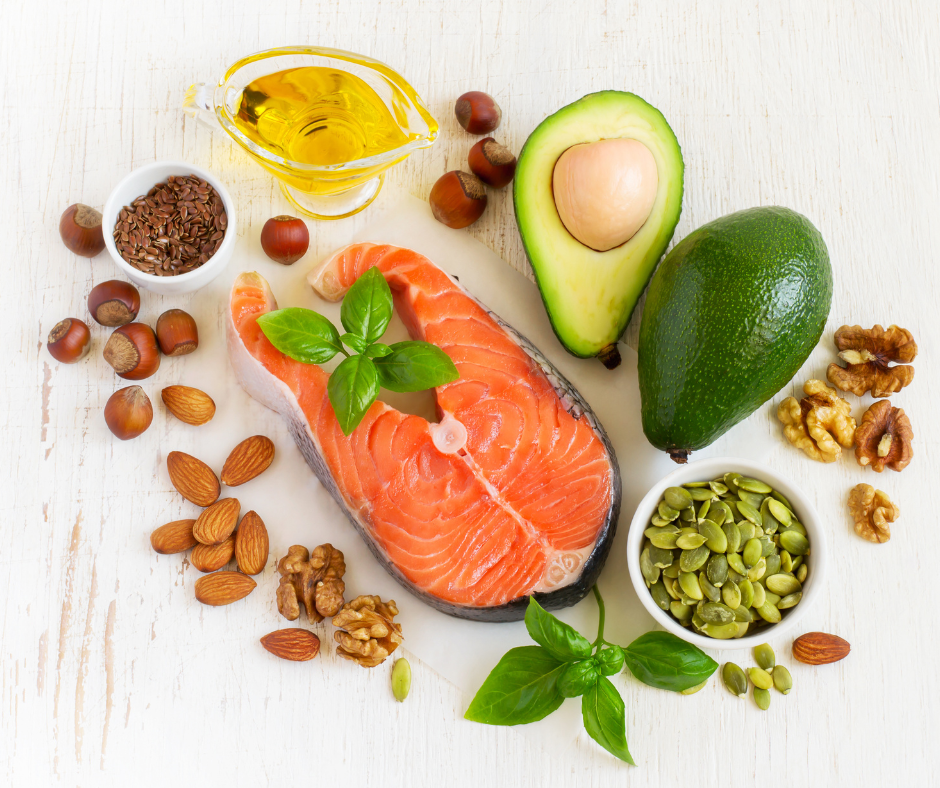
Omega 3 fatty acid-rich foods include mackerel, salmon, anchovies, flax seed, walnuts, chia seeds, pasture-raised eggs, spinach, brussels sprouts, meat and dairy from grass-fed animals.
– Exercise. Exercising, consistently, may play a role in serotonin production. According to livestrong.com, “One 2014 study in the European Journal of Psychology and Educational Studies found that even mild to moderate levels of exercise, two to three times a week, can reduce symptoms of depression, though the quantities of blood level serotonin tested in a small sample size of individuals were not found to be highly significant.” (4)
At the very least, moving our bodies helps keep us fit and feeling well.
– Spend time outdoors in nature and sunlight. Light therapy has become a popular way to help sufferers of Seasonal Affective disorder (SAD). It aids in Vitamin D production. When Vitamin D is low, serotonin levels will not be optimal. This can be applied to those who suffer from non-seasonal affective disorder, as well as depression.
If you’re interested in light therapy, safely expose yourself to the sun, or a light box, often.
– Get enough sleep. Sleep deprivation negatively impacts serotonin pathways. Likewise, serotonin plays a major role in maintaining proper sleep patterns. Getting a solid 8 hours, of sleep, every night ought to be the goal.
Proper sleep hygiene is a must for serotonin production, as well as for overall health.
– Work on Stellar Gut Health. One probiotic strain, Lactobacillus, increases serotonin. Supplementing with probiotics, and digestive enzymes, eating probiotic-laced foods, and avoiding pharmaceutical antibiotics help ensure that the number of good bacteria, in the gut, remains at an optimal level.
Click on this link to learn about natural antibiotics: https://shalomtotalwellness.com/2022/09/05/top-5-natural-antibiotics/
The healthier our guts are, the more able they will be to aid in serotonin production.
– Think positively! Serotonin levels affect moods and moods affect serotonin levels. This goes both ways. There is a direct link between the quality of our thought life and our moods. The more we allow negativity to invade our lives, the more our inner thought lives will suffer.
Meditate on things that fall into the Philippians 4:8 category and protect your eye and ear gates.

– Choose a Life of Shalom. Stress increases cortisol levels and decreases serotonin. It can’t always be avoided. Life tends to happen. This includes unpleasant things that are beyond our control. However, we can control how we choose to respond to those things.
Rather than living, in reaction, respond with shalom. We can roll our cares onto Yeshua (Jesus), trusting Him to walk us through all our days…the good, the bad, and the ugly.
“Come unto me, all ye that labour and are heavy laden, and I will give you rest.” Jesus in Matthew 11:28 (KJV)
Difficult seasons, of life, exist. Depression is real. But you can be the boss of your thoughts and feelings!
Boosting serotonin levels using natural methods does take a bit of purposefulness. However, it’s well worth the effort.
You’re well worth the effort AND more powerful than you may realize!
I pray this was encouraging to you. May GOD give you the wisdom, and guidance you need for your mental, emotional, physical, and spiritual health.
Shalom to you,

“Beloved, I pray that you may prosper in all things and be in health, just as your soul prospers.” 3 John 1:2

Excerpts of this blog were taken from the book Shalom Total Wellness: Biblical Principles for Health & Healing by Dr. Sheli Ricci. Available on Amazon and barnesandnoble.com.
References:
- Carabotti M, Scirocco A, Maselli MA, Severi C. The gut-brain axis: interactions between enteric microbiota, central and enteric nervous systems. Ann Gastroenterol. 2015 Apr-Jun;28(2):203-209. PMID: 25830558; PMCID: PMC4367209.
- Strandwitz P. Neurotransmitter modulation by the gut microbiota. Brain Res. 2018;1693(Pt B):128-133. doi:10.1016/j.brainres.2018.03.015 [www.ncbi.nlm.nih.gov/pmc/articles/PMC6005194]
- Kidd PM. Omega-3 DHA and EPA for cognition, behavior, and mood: clinical findings and structural-functional synergies with cell membrane phospholipids. Altern Med Rev. 2007 Sep;12(3):207-27. 152 PMID: 18072818. [https://pubmed.ncbi.nml.nih.gov/18072818/]
- [www.livestrong.com/article/22590-effects-exercise-serotonin-levels/]
 Shalom Total Wellness